
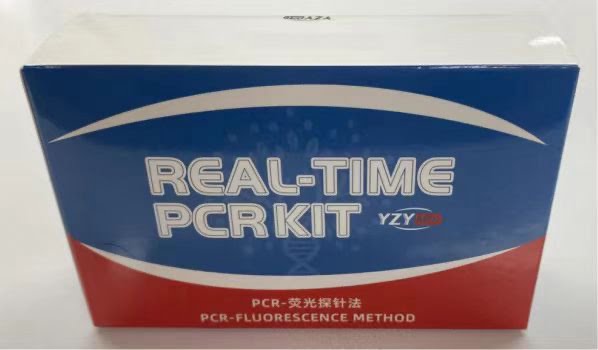

Description du produit:
- Nom: Kit de détection de mutation génétique EGFR
- But: Détection qualitative de 11 mutations courantes dans le gène EGFR humain.
- Spécimens: Échantillons d'ADN provenant de coupes incluses en paraffine de patients cliniquement diagnostiqués avec un cancer du poumon non à petites cellules.
- Vérification: Le produit a été vérifié pour ses performances de détection des mutations du gène cible, mais n'a pas été associé à des médicaments spécifiques lors d'essais cliniques..
Utilisation et limites:
- Utiliser: Les résultats de la détection peuvent aider à dépister les patients atteints d'un cancer du poumon non à petites cellules appropriés pour un traitement ciblé sur l'EGFR.
- Limites: Les résultats de détection ne peuvent à eux seuls servir de base au diagnostic clinique..
Informations générales:
- EGFR: Récepteur du facteur de croissance épidermique, une protéine membranaire cruciale pour la prolifération cellulaire, croissance, réparation, et survie des cellules tumorales.
- Structure des gènes: Situé sur le chromosome 7 (7pages 12 à 14), le gène EGFR comprend 28 exons. Exons 18-24 former le domaine tyrosine kinase codant pour le gène.
- Focus sur les mutations: La plupart des mutations se produisent dans les exons 18-21, notamment l'exon 19 suppression et exon 21 Mutation L858R.
- Pertinence clinique: Ces mutations prédisent l’efficacité de médicaments ciblés dans le traitement du cancer du poumon non à petites cellules et guident la sélection des médicaments pour le traitement des tumeurs..
- Exigence de la FDA: La détection des mutations du gène EGFR est obligatoire pour les patients envisageant un traitement par EGFR-TKI.
Tableau 1: Mutations courantes du gène EGFR
| Mutation | Exon | Modifications de la séquence d'acides aminés | Changements de séquence de bases | ID cosmique |
|---|---|---|---|---|
| Ex 18-Mu-1 | 18 | G719S | 2155g>UN | 6252 |
| Ex 18-Mu-2 | 18 | G719C | 2155g>T | 6253 |
| Ex 18-Mu-3 | 18 | G719A | 2156g>C | 6239 |
| Ex 19-Mu-1 | 19 | Glu746-Ala750del | 2235-2249de la | 6223 |
| Ex 20-Mu-1 | 20 | S768I | 2303g>T | 6241 |
| Ex 20-Mu-2 | 20 | T790M | 2369C>T | 6240 |
| Ex 20-Mu-3 | 20 | V769-D770insASV | 2307_2308insGCCAGCTGTG | 12376 |
| Ex 20-Mu-4 | 20 | H773-V774insH | 2319_2320insCAC | 12377 |
| Ex 20-Mu-5 | 20 | D770-N771insG | 2310_2311insGGT | 12378 |
| Ex 21-Mu-1 | 21 | L858R | 2573T>g | 6224 |
| Ex 21-Mu-2 | 21 | L861Q | 2582T>UN | 6213 |
Principe du test
Ce kit est conçu pour détecter des mutations spécifiques du gène EGFR. Il comprend des amorces et des sondes pour détecter:
- Mutations G719X (G719S, G719C, G719A) dans l'exon 18,
- Mutations par suppression de l'exon 19 (dont 2235-2249del 15),
- Mutations S768I et T790M dans l'exon 20,
- Trois types de mutations par insertion (2307_2308insGCCAGCTGTG, 2319_2320insCAC, et 2310_2311insGGT),
- Mutations L858R et L861Q dans l'exon 21.
Lors de la détection de mutations, si l'échantillon contient des modèles d'ADN mutationnel:
- Les amorces et sondes spécifiques à la mutation détectée se lieront à l'ADN matrice.
- RAP une amplification se produira, libérant des signaux de fluorescence.
- La surveillance en temps réel et la sortie de la force du signal de fluorescence seront effectuées à l'aide d'un amplificateur PCR quantitatif fluorescent.
Si l'échantillon ne contient pas de modèles d'ADN mutationnel:
- Les amorces et sondes spécifiques à la mutation ne se lieront pas à l’ADN matrice, ou leur liaison sera bloquée.
- Cela entraînera une absence d’amplification PCR ou une amplification PCR inhibée..
- Par conséquent, aucun signal de fluorescence ne sera émis.
Dans l'ensemble, le kit permet une analyse qualitative des résultats de détection grâce à la surveillance en temps réel des signaux de fluorescence lors de l'amplification PCR.
Tableau 2 Principaux ingrédients du kit
| Numéro de tube. | Nom de l'étiquette | Principaux ingrédients | Spécifications d'emballage (12 tests/kit) | Spécifications d'emballage (24 tests/kit) |
|---|---|---|---|---|
| 1 | Liquide de réaction PCR G719X | Tampon PCR, dNTP, Amorce et sonde G719X | 1 tube (290µL) | 1 tube (580µL) |
| 2 | Liquide de réaction PCR S768I | Tampon PCR, dNTP, Amorce et sonde S768I | 1 tube (290µL) | 1 tube (580µL) |
| 3 | Liquide de réaction PCR T790M | Tampon PCR, dNTP, Amorce et sonde T790M | 1 tube (290µL) | 1 tube (580µL) |
| 4 | Liquide de réaction PCR L858R | Tampon PCR, dNTP, Amorce et sonde L858R | 1 tube (290µL) | 1 tube (580µL) |
| 5 | Liquide de réaction PCR L861Q | Tampon PCR, dNTP, Amorce et sonde L861Q | 1 tube (290µL) | 1 tube (580µL) |
| 6 | Liquide de réaction Ins PCR | Tampon PCR, dNTP, Ins amorce et sonde | 1 tube (290µL) | 1 tube (580µL) |
| 7 | Liquide de réaction Del PCR | Tampon PCR, dNTP, Dès le premier et sonde | 1 tube (290µL) | 1 tube (580µL) |
| 8 | Liquide de réaction PCR de contrôle qualité | Tampon PCR, dNTP, amorce et sonde de contrôle qualité | 1 tube (290µL) | 1 tube (580µL) |
| 9 | Mélange d'enzymes | Mélange d'enzymes contenant l'enzyme Taq et l'enzyme UNG | 1 tube (24µL) | 1 tube (48µL) |
| 10 | Colorant de référence | colorant ROX | 1 tube (45µL) | 1 tube (90µL) |
| 11 | Modèle de norme interne | Modèle d'ADN standard interne | 1 tube (100µL) | 1 tube (100µL) |
| 12 | Contrôle faiblement positif | Contenant un modèle d'ADN de mutation | 1 tube (200µL) | 1 tube (200µL) |
| 13 | Contrôle vide | Tris-HCl tampon (10mM) | 1 tube (200µL) | 1 tube (200µL) |
Conditions de stockage et durée de conservation:
- La durée de conservation du kit est 9 mois lorsqu'il est stocké à -20 ℃ ± 5 ℃ et à l'abri de la lumière.
- Réduire au minimum la congélation et la décongélation à moins de 6 fois pendant l'utilisation.
- La date de production et la date de péremption sont indiquées sur l'étiquette.
Instruments applicables:
- Le kit est compatible avec Stratagene MX3000P, UN B 7500, et LightCycler 480 amplificateurs PCR quantitatifs fluorescents en temps réel.
- Utilisez le canal FAM pour collecter les signaux fluorescents de l'amplification du gène EGFR, Canal VIC/JOE/HEX pour les signaux d'amplification génique standard interne, et établir le signal de référence (ROX).
Exigences en matière d'échantillons:
- Un ADN de haute qualité est crucial. The kit is suitable for detecting human genome DNA extracted from paraffin-embedded pathological tissues confirmed by a doctor to contain tumor tissues. Specimens within 3 years are suggested.
- QIAGEN DNA Extraction Kit (QIAamp DNA FFPE Tissue Kit, Chat non. 56404) is recommended. Extracted DNA concentration and purity should be tested with a UV spectrophotometer (OD260/OD280: 1.8-2.0). Dilute DNA to 10-15ng/μL and test immediately or store below -20℃ without repetitive freezing and thawing.
Test Methods:
1. Reagent Preparation:
- Allow the kit to reach room temperature, fully melt all components, et centrifugeuse pour 10 secondes.
- Determine the number of reactions (n) needed. Préparer 7 types of mutation PCR reaction mixtures and quality control PCR reaction mixtures according to the specified method in Table 3.
- n=Number of specimens+Blank control (1T)+Contrôle faiblement positif (1T)
- Pack the prepared tube 1-8 PCR reaction liquid into reaction tubes according to the packing amount of 23μL per well.
- Transfer PCR reaction tubes to the specimen preparation area. Store the remaining reagent back in the refrigerator at -20℃ ±5℃ for freezing and protection from light.
Tableau 3: Preparation Method of Each PCR Reaction System
| Composant | Formula of single reaction system | Formula of n reaction systems |
|---|---|---|
| PCR reaction liquid | 22.3µL | 22.3×n μL |
| Mélange d'enzymes | 0.2µL | 0.2×n μL |
| Colorant de référence (ROX) | 0.4µL | 0.4×n μL |
| Modèle de norme interne | 0.1µL | 0.1×n μL |
2. Préparation des échantillons:
(Specimen preparation area)
- Extraction of Specimen DNA:
- Follow the instructions provided with the purchased commercial genome DNA extraction kit.
- Sample Adding:
- un) Add genome DNA, weakly positive control, and blank control of the specimens to be tested into the reaction tubes containing the 1-8 PCR reaction mixture. Each specimen is tested with 8 types of PCR reaction mixture, with an additional amount of 2μL per well. The recommended concentration of specimen DNA is 10-15ng/μL.
- b) If the PCR reaction tubes with added templates cannot be immediately placed onto the instrument due to temporary situations, store them at 2-8℃ temporarily and conduct detection on the instrument as soon as possible within 24 heures.
3. Amplification PCR:
(Nucleic acid amplification area)
- Start the instrument and perform self-inspection of instrument performance.
- Take the PCR reaction tubes prepared in the specimen preparation area and place them in corresponding positions in the sample tank of the instrument. Record the placement sequence.
- Set up relevant parameters for nucleic acid amplification according to Table 4 and start PCR amplification. After the reaction is completed, define an appropriate fluorescence threshold (generally delimited in the middle of the exponential growth phase under the logarithmic form of the amplification curve) to obtain Ct values for different channels and calculate relevant △Ct values according to the amplification curve.
Tableau 4: Relevant Parameters of Nucleic Acid Amplification of Instrument
| Conditions de réaction de PCR | Phase | Conditions | Nombre de cycles |
|---|---|---|---|
| UNG treatment | 37℃ | 10 minutes (min) | 1 |
| Pre-degeneration | 95℃ | 5 minutes (min) | 1 |
| RAP | 95℃ | 15 secondes (s) | 40 |
| 60℃ | 60 secondes (s) | ||
| (Fluorescence signals collected at the end of this phase) |
Signal Acquisition:
- EGFR gene: Fluorescence signals are collected from the FAM channel.
- Internal standard gene: Fluorescence signals are collected from the HEX/VIC/JOE channel.
Analyse des résultats:
After the completion of the reaction, the threshold is set according to the amplification curve to calculate △Ct (△Ct = Mutation detection Ct – Quality control detection Ct) and interpret the results.
Interpretation of Test Results:
1. Determination of Kit Effectiveness:
- Contrôle faiblement positif:
- Ct value of FAM channel is ≤32 with an obvious exponential growth phase in the amplification curve.
- Contrôle vide:
- FAM channel shows no amplification curve or a straight line or slight oblique line. No obvious exponential growth phase, Ct value is ≥38.
- Internal standard gene:
- In blank control, the Ct value of HEX/VIC/JOE channel is <38 with an obvious exponential growth phase.
- In the tested specimen and weakly positive reaction tube, occasional absence of signal in the HEX/VIC/JOE channel when the FAM channel has a signal may occur due to internal standard amplification inhibition by the target gene amplification.
2. Determination of Specimen Effectiveness:
- Liquide de réaction PCR de contrôle qualité:
- For FAM channel, CT < 23, indicating specimen genome DNA overdose. Suggested re-testing after dilution.
- Liquide de réaction PCR de contrôle qualité:
- For FAM channel, 23 ≤ Ct ≤ 30, indicating moderate dose of specimen genome DNA.
- Liquide de réaction PCR de contrôle qualité:
- For FAM channel, 30 < CT < 34, indicating lower dose of specimen genome DNA. Mutation type can be tested only in specimens with higher content of mutation DNA.
- Liquide de réaction PCR de contrôle qualité:
- For FAM channel, Ct ≥ 34, indicating too low adding dose of specimen genome DNA. Requires preparation of new specimen or addition of usage amount for detection.
3. Determination of Detection Results:
After determining the effectiveness of detection, calculate the △Ct value of effective detection specimens and determine the detection results according to the following steps and Table 5 to confirm the presence of mutation in the specimen.
- In specimen mutation detection, Valeur CT > 36 indicates the specimen is negative or below the lower detection limit of this kit.
- In specimen mutation detection, if Ct value is ≤ 36, calculate the △Ct value of this reaction tube. If △Ct value is less than the corresponding △Ct Cut-Off value, the specimen is considered mutation-positive. Sinon, it is considered mutation negative or below the lower detection limit of this kit.
- Applying the above determination criteria, the mutation type of G719X positive specimen may be one of G719S, G719C, and G719A. The mutation type of Ins positive specimen may be one of V769-D770insASV, H773-V774insH, and D770-N771insG. This product cannot be further divided.
Tableau 5: Determination of Results
| Reaction Liquid | Mutation Type | Négatif | Positif |
|---|---|---|---|
| Liquide de réaction PCR G719X | G719X | CT > 36 ou pas de valeur CT | CT ≤ 36, ΔCt ≥ 7 |
| Liquide de réaction PCR S768I | S768I | CT > 36 ou pas de valeur CT | CT ≤ 36, ΔCt ≥ 7 |
| Liquide de réaction PCR T790M | T790M | CT > 36 ou pas de valeur CT | CT ≤ 36, ΔCt ≥ 7 |
| Liquide de réaction PCR L858R | L858R | CT > 36 ou pas de valeur CT | CT ≤ 36, ΔCt ≥ 7 |
| Liquide de réaction PCR L861Q | L861Q | CT > 36 ou pas de valeur CT | CT ≤ 36, ΔCt ≥ 7 |
| Liquide de réaction Ins PCR | Ins | CT > 36 ou pas de valeur CT | CT ≤ 36, ΔCt ≥ 6 |
| Liquide de réaction Del PCR | Del | CT > 36 ou pas de valeur CT | CT ≤ 36, ΔCt ≥ 6 |
Limitations of Test Methods:
- The accuracy of specimen detection results depends on the quality of specimen collection, treatment, and storage. Errors in these processes can lead to inaccurate detection results. Poor DNA quality during specimen treatment may result in false negative results. For the FAM channel of the quality control PCR reaction liquid, specimens with Ct values between 23 et 30 indicate relatively good DNA quality and moderate sample addition, resulting in the most accurate detection results.
- Negative results obtained from specimen detection cannot rule out the presence of mutations with low abundance or mutations in other loci of the EGFR gene.
- The detection results of this kit are intended for clinical reference to guide personalized medicine and should not be used as the sole basis for clinical diagnosis.
Product Performance Indexes:
- The kit is fully packed without overflow of contents. The label is intact with clear identification content. The composition of the kit is correct without repetition or missing components.
- Specific reference is detected using the 7 types of mutation reaction liquid included in the kit, and all detection results are negative.
- The sensitivity of corresponding mutations is detected using the 7 types of mutation reaction liquid included in the kit, and all detection results are positive.
- The lowest limit of detection can reach 1%, allowing the detection of various types of EGFR gene mutations in 20ng genome DNA.
- The kit is used to repeatedly detect the precision reference of the EGFR gene 10 fois, with an intra-assay coefficient of variation (CV) of ≤5%.
Précautions:
- This kit is intended for in vitro diagnosis only.
- Do not mix reagents from this kit with those from other lots.
- The weakly positive control in this kit is not contagious but should be handled as potentially infectious material.
- Residual reagents in the kit and experiment wastes should be handled according to medical waste disposal guidelines.
Les références:
- NCCN Clinical Practice Guidelines in Oncology – Non-Small Cell Lung Cancer Guideline (Chinese edition), V1.2009.
- Huang Jie, Qu Shoufang, et autres. Establishment of human EGFR gene mutation control materials. Chinese Journal of Pharmaceutical Analysis, 2011, 31(9):1758-1763.
- Expert Consensus on Gene Mutation Detection of Epidermal Growth Factor Receptor of Patients with Non-Small Cell Lung Cancer in China. Chinese Journal of Pathology, 2011, 40(10).

Commentaires
Il n'y a pas encore de critiques.