
Stool Sample in Molecular Biology Research:
- Utility and Applications:
- Stool samples are increasingly utilized in animal molecular genetics, population ecology, behavioral ecology, and intestinal disease diagnosis.
- They contain gut microbial DNA, food residue sample DNA, and alimentary tract exfoliated cell DNA.
- Défis:
- Low content of exfoliated cells in the digestive tract and degradation of genetic material pose primary challenges.
- Presence of inhibitors such as polysaccharides, bile acids, bile salts, bile pigments, digestive juices, and mucus can affect RAP-based molecular analysis.
Importance de l'extraction de l'ADN:
Critical Role:
-
- Selecting appropriate extraction methods is crucial for obtaining high-quality DNA and ensuring successful downstream detection of stool DNA.
HiPure Stool DNA Kit:
- Solution Provided:
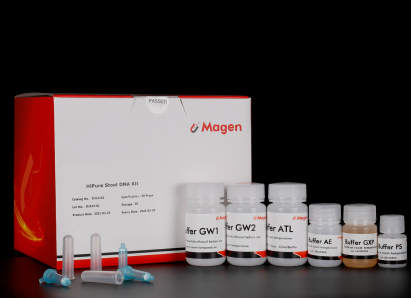
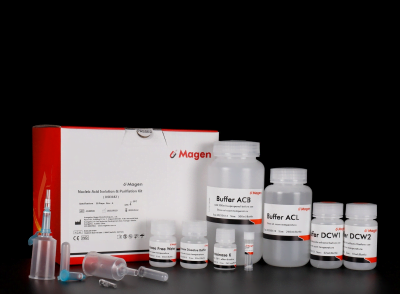
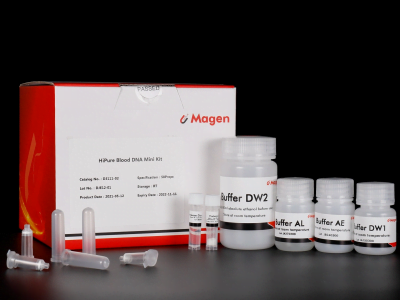
- The HiPure Stool DNA Kit from Magen Company offers a promising solution.
- Features good universality, high cost-effectiveness, high yield, and purification.
- Unique Features:
- Utilizes a unique solution system and inhibitory factor adsorbent to efficiently remove various impurities in stool samples.
- The purified DNA can be directly used for PCR, PCR quantitative, et d'autres applications.
- Efficiency and Ease of Use:
- Enables rapid and reliable isolation of high-quality genomic DNA from various stool samples.
- Capable de traiter jusqu'à 100 mg of stool samples within 60 minutes.
- Combines reversible nucleic acid binding properties with colonne de rotation technologie, eliminating PCR inhibiting compounds.
- Suitable for PCR, digestion des restrictions, et applications de séquençage de nouvelle génération.
- Sustainability and Scalability:
- Eliminates the need for organic extractions, reducing plastic waste and hands-on time.
- Allows multiple samples to be processed in parallel, enhancing efficiency.
Détails
Caractéristiques
| Caractéristiques | Caractéristiques |
| Fonctions principales | Isolation total DNA from 50-100mg stool samples |
| Applications | RAP, Blot du Sud, enzyme digestion and NGS, etc.. |
| Méthode de purification | Mini colonne d'essorage |
| Technologie de purification | Technologie de la silice |
| Méthode de processus | Manuel (centrifugation ou vide) |
| Échantillon type | Tabouret |
| Montant de l'échantillon | 50-100mg |
| Rendement | 3-15µg |
| Volume d'élution | ≥30 μl |
| Temps par course | ≤60 minutes |
| Volume de liquide transporté par colonne | 750µl |
| Rendement de liaison de la colonne | 100µg |
Principe
Stool DNA Extraction Process:
- Homogénéisation et lyse:
- Stool sample is homogenized and treated in a specially formulated buffer containing detergent.
- This step effectively lyses bacteria, levure, and fungal samples present in the stool.
- Élimination des contaminants:
- Our proprietary Absorber Solution is used to remove humic acid, protéines, polysaccharides, et d'autres contaminants de l'échantillon lysé.
- Reliure et lavage:
- Adjusted binding conditions facilitate the attachment of DNA to a DNA Mini Column.
- Two rapid wash steps are performed to remove trace contaminants, ensuring purity of the DNA.
- Elution of Purified DNA:
- Pure DNA is eluted from the column in a low ionic strength buffer.
- The resulting purified DNA is ready for direct use in downstream applications without the need for further purification.
Avantages
- Haute pureté – un adsorbant unique peut éliminer complètement les facteurs inhibiteurs
- Haute concentration – maximum extraction of total DNA from stool samples
- Récupération élevée – L'ADN peut être récupéré au niveau du PG
- Bonne répétabilité – la technologie de la silice peut obtenir des résultats idéaux à chaque fois
Contenu du kit
| Contenu | D314102 | D314103 |
| Temps de purification | 50 Préparations | 250 Préparations |
| HiPure DNA Mini Colonnes II | 50 | 250 |
| 2Tubes de prélèvement ml | 50 | 250 |
| 2ml Bead Tubes | 50 | 250 |
| Protéinase K | 24 mg | 120 mg |
| Tampon de dissolution de protéase | 1.8 ml | 10 ml |
| Buffer SPL | 40 ml | 200 ml |
| Tampon PCI | 40 ml | 200 ml |
| Tampon AL | 20 ml | 80 ml |
| Tampon GW1 | 22 ml | 88 ml |
| Tampon GW2 | 20 ml | 2 X 50 ml |
| Tampon AE | 15 ml | 30 ml |
Stockage et stabilité
Instructions de stockage:
- Proteinase K and Buffer PCI:
- À l'arrivée, store at 2-8°C.
- Stockage à court terme (jusqu'à 12 semaines) à température ambiante (15-25°C) n'affecte pas leurs performances.
- Composants du kit restant:
- Stocker à température ambiante (15-25°C).
- Stable pour au moins 18 mois dans ces conditions.
- Entire Kit:
- Can be stored at 2–8°C.
- Buffers should be redissolved before use if stored at this temperature.
- Ensure all buffers are at room temperature when used.
Commentaires
Il n'y a pas encore de critiques.